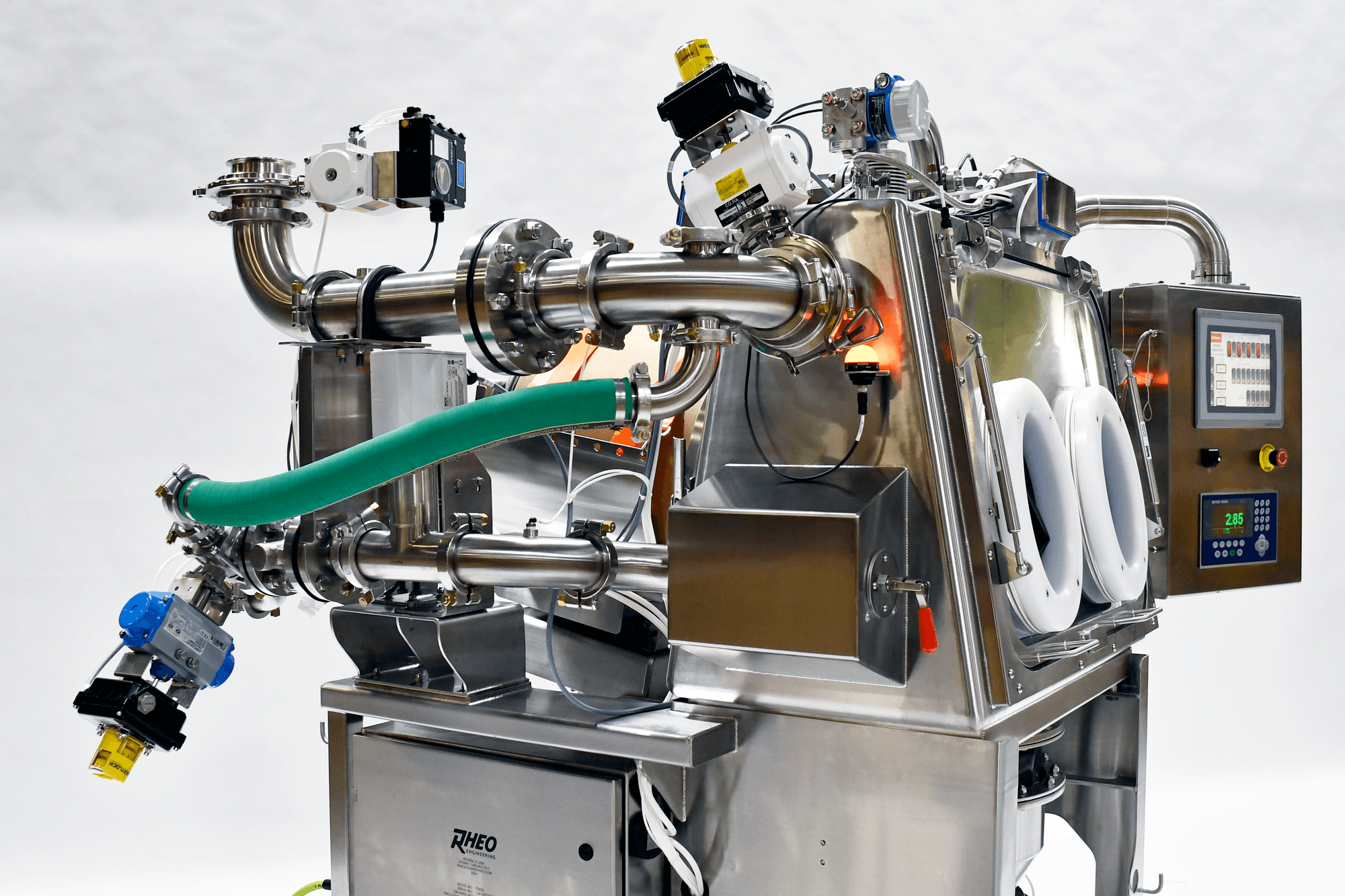
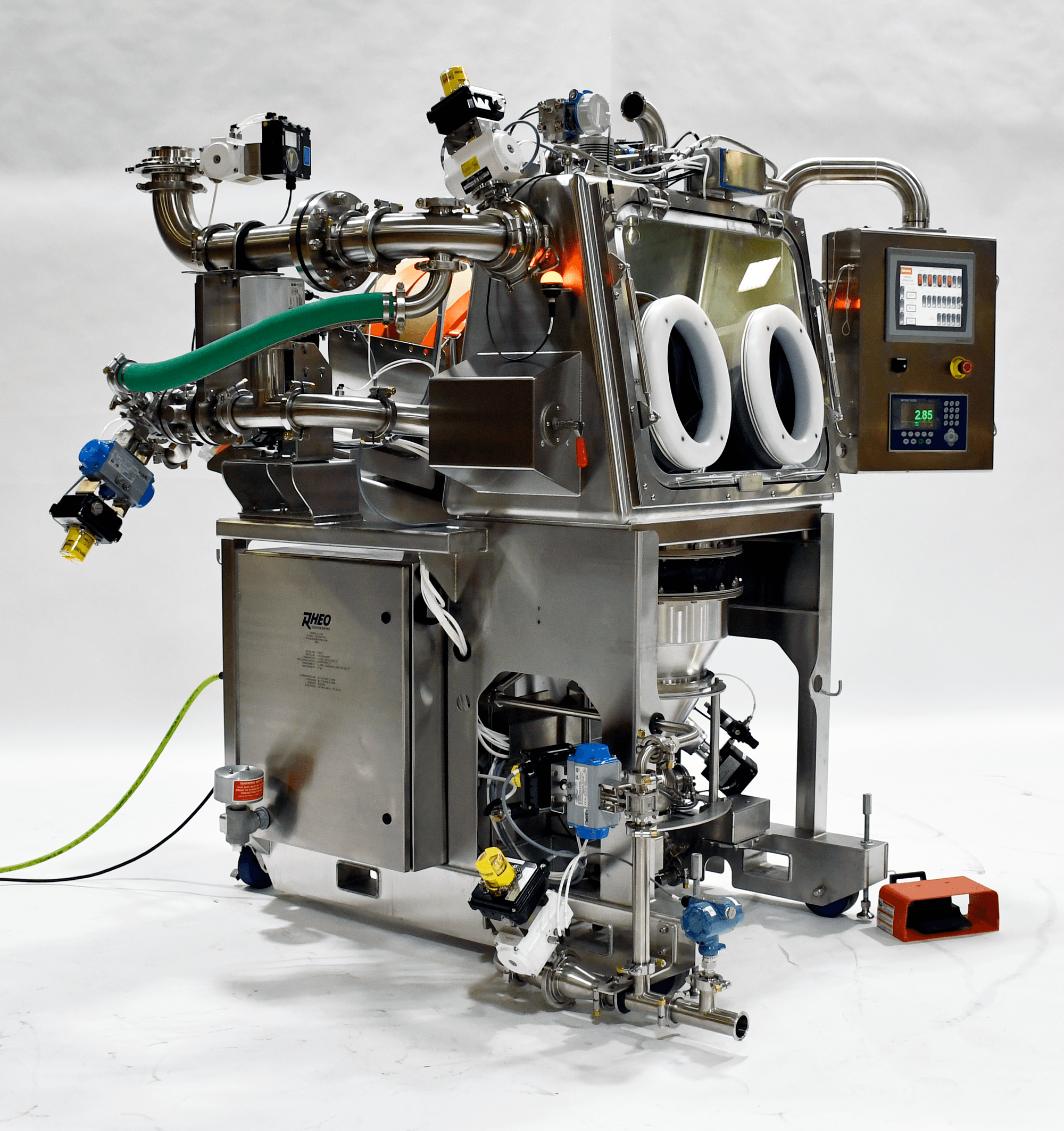
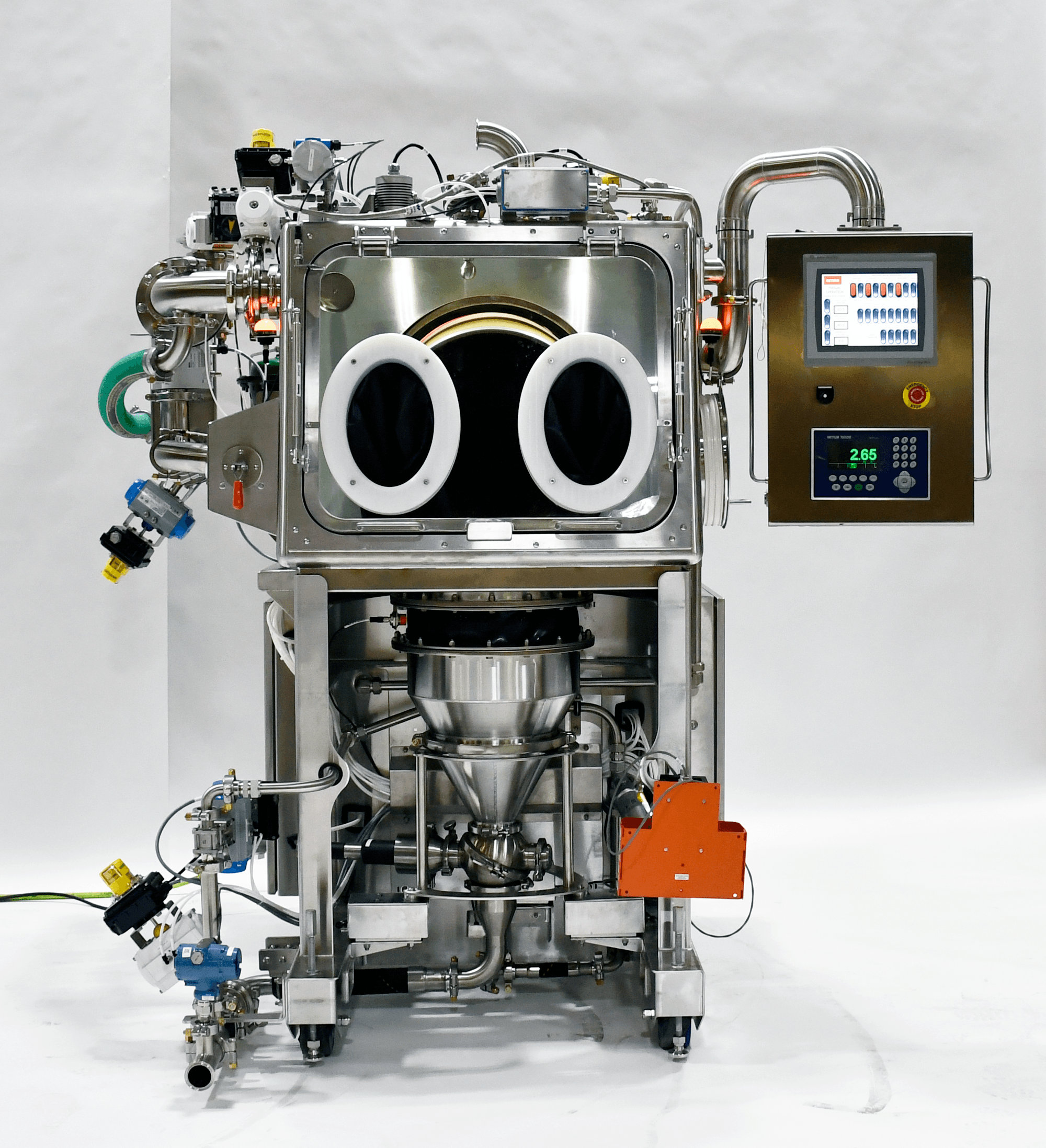
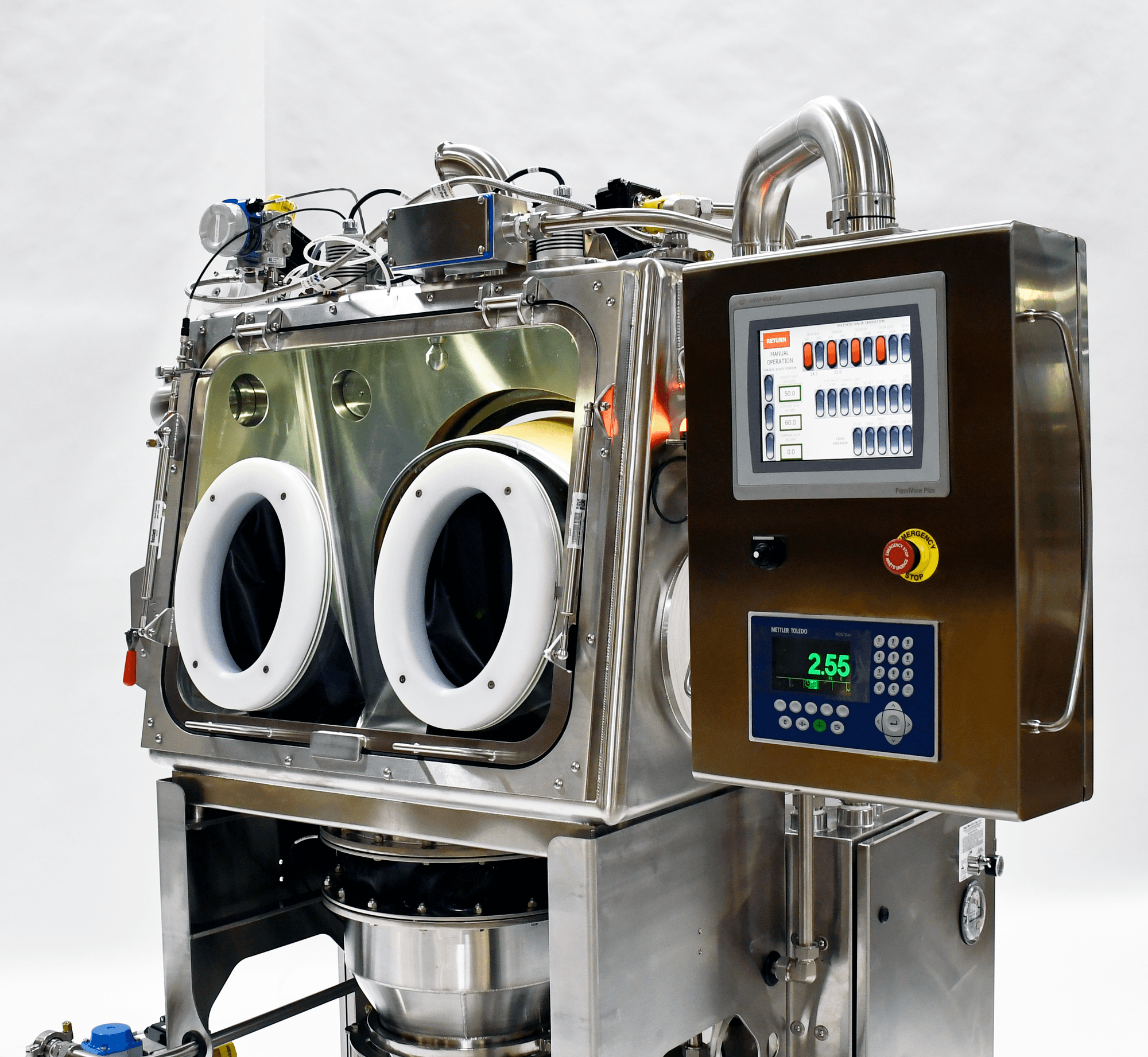
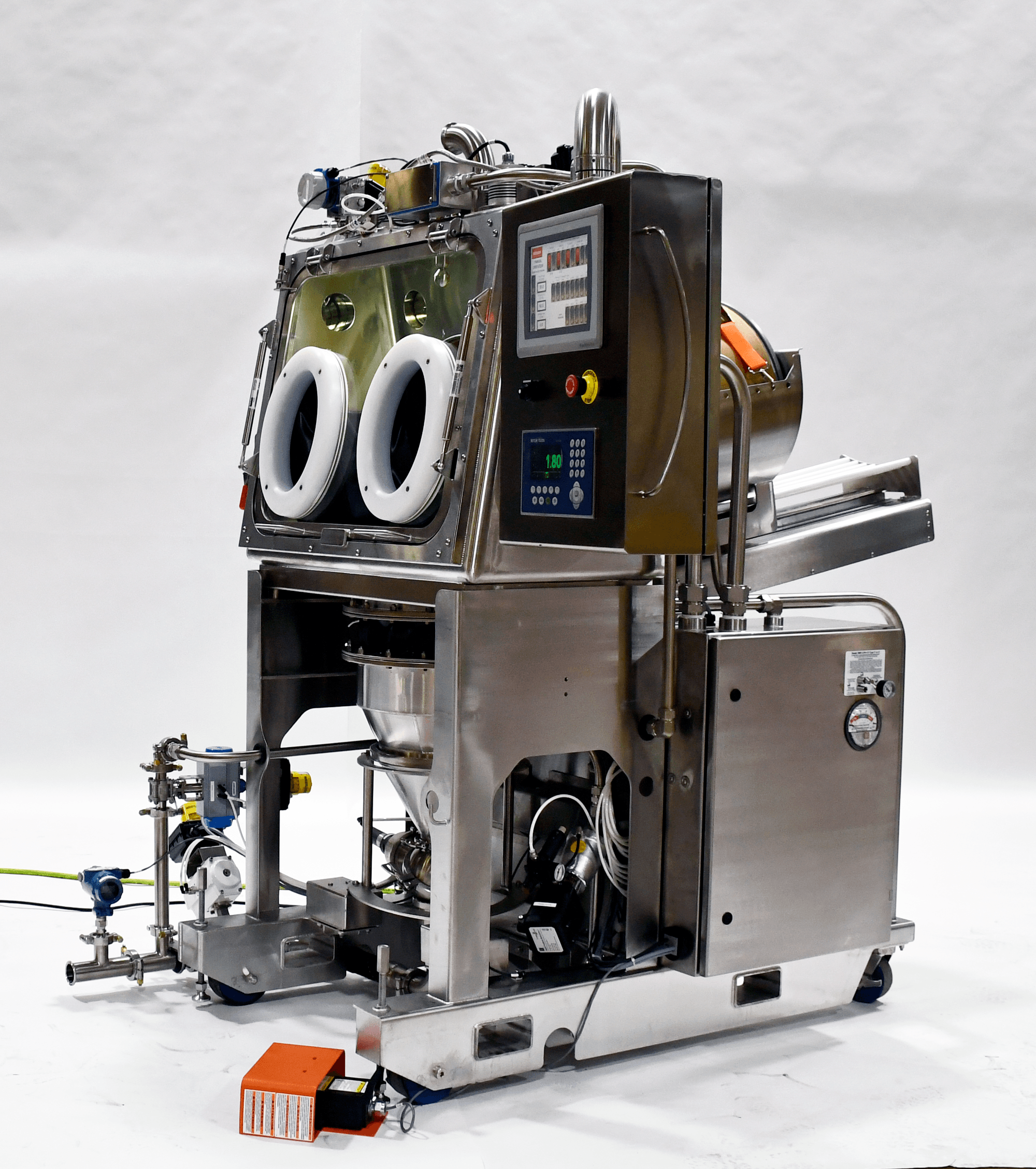
For this project, Rheo designed and built a hard-wall containment isolator for use during a vessel charging process. The client required the ability to weigh and transfer toxic OEB3 and OEB4 powders out of large lots of drums into reactors via a vacuum conveyance process.
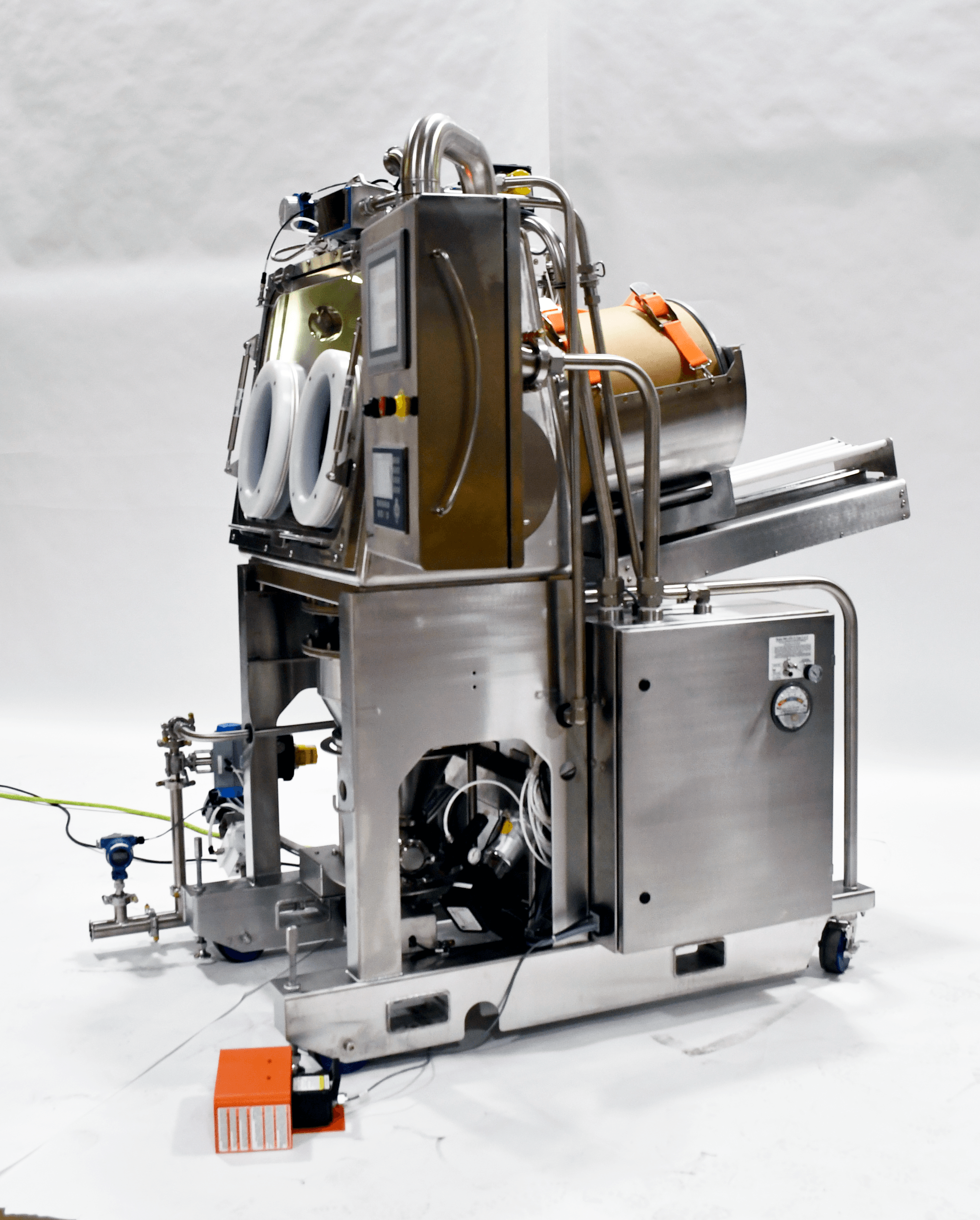
Rheo provided a Material Transfer Station [MTS] with rigid isolator and integrated vacuum hopper. The MTS’s integrated Drum Tipper with inflatable seal entry port allowed for a contained drum change-out process. When the drum is changed, the glovebox relies on high airflow to provide containment during changeout. The MTS allows operators to ergonomically unload and process drums into charge reactor.
The vacuum hopper below the isolator is attached via a flexible solvent-resistant EPDM sleeve for weighing isolation, as the hopper is on load cells for exact weighing of the contents transferred to the reactor. The hopper is also equipped with a rotary valve to assist in breaking up agglomerations and also prevent nitrogen fluidization backflow from entering the isolator. When the proper amount of material is dispensed into the hopper, the transfer valve opens via foot pedal control to allow the product to flow from the hopper via the vessel vacuum source, allowing the client to transfer free-flowing powders long distances within their plant to different reactors. The transfer system was equipped with an automated nitrogen fluidization to assist in material flow.
Rheo provided the controls for all the equipment, managed by the operator through a touch screen HMI. Atmosphere control (negative pressure and oxygen concentration) was managed in the isolator automatically via PID control loops and pressure/O2 sensors. All equipment was designed for use in a Class I, Division 2 Group C&D area via a combination of intrinsically safe, purged and pressurized, and explosion proof components.
The MTS is also designed for full clean in place via a rotary spray ball in the isolator. The rotary valve and tubing below is designed to be cleaned and drain via CIP solvents.