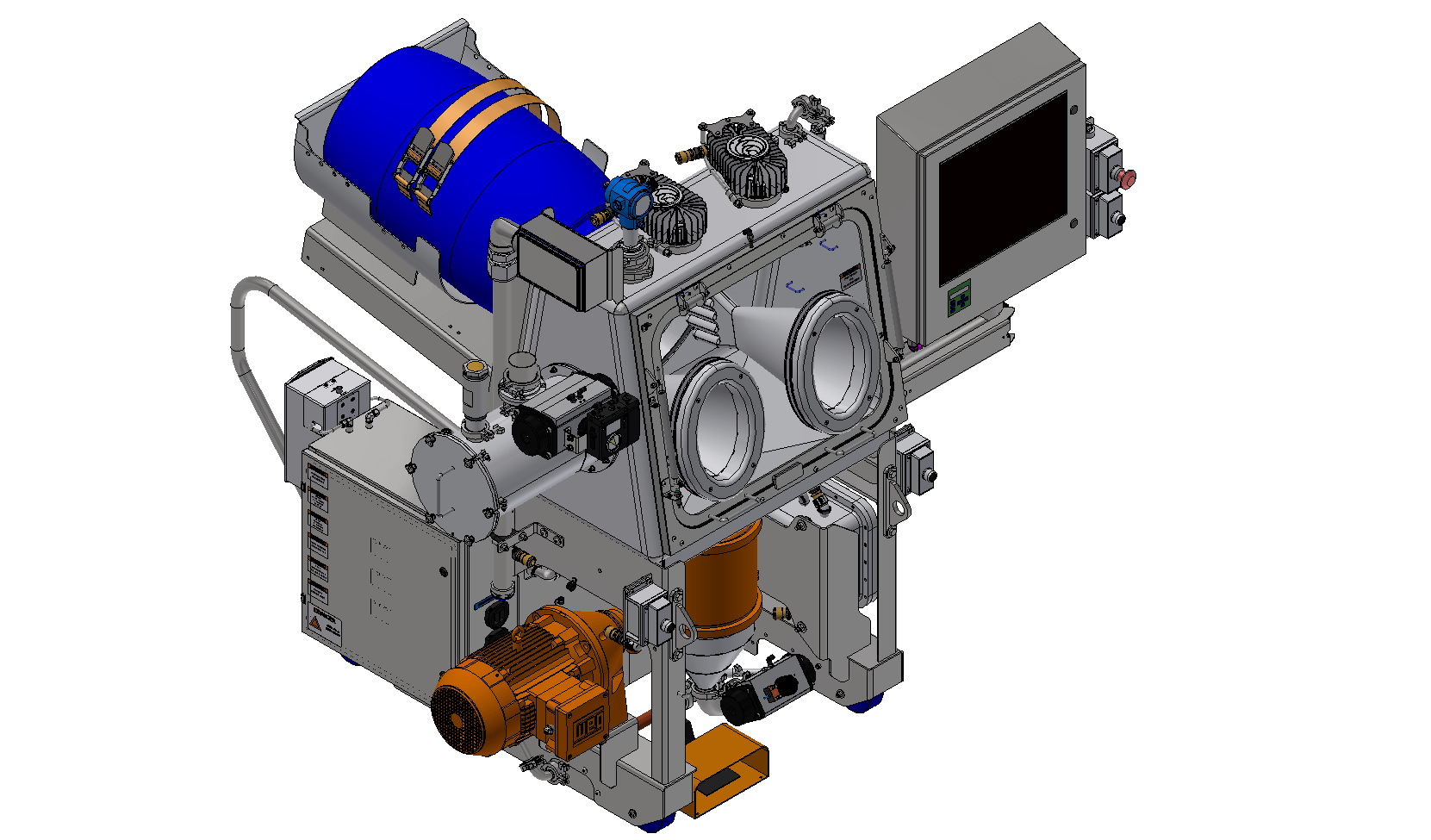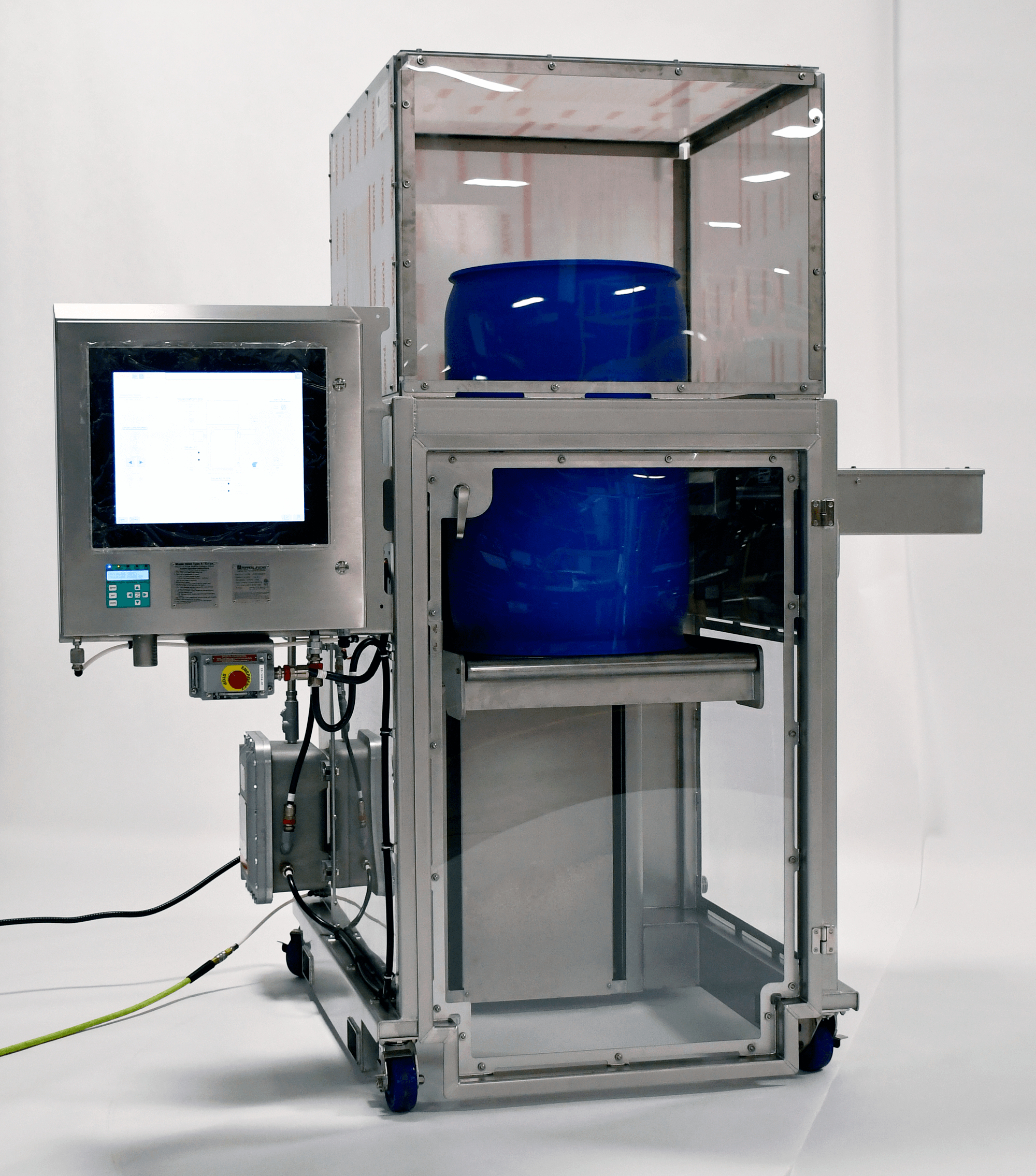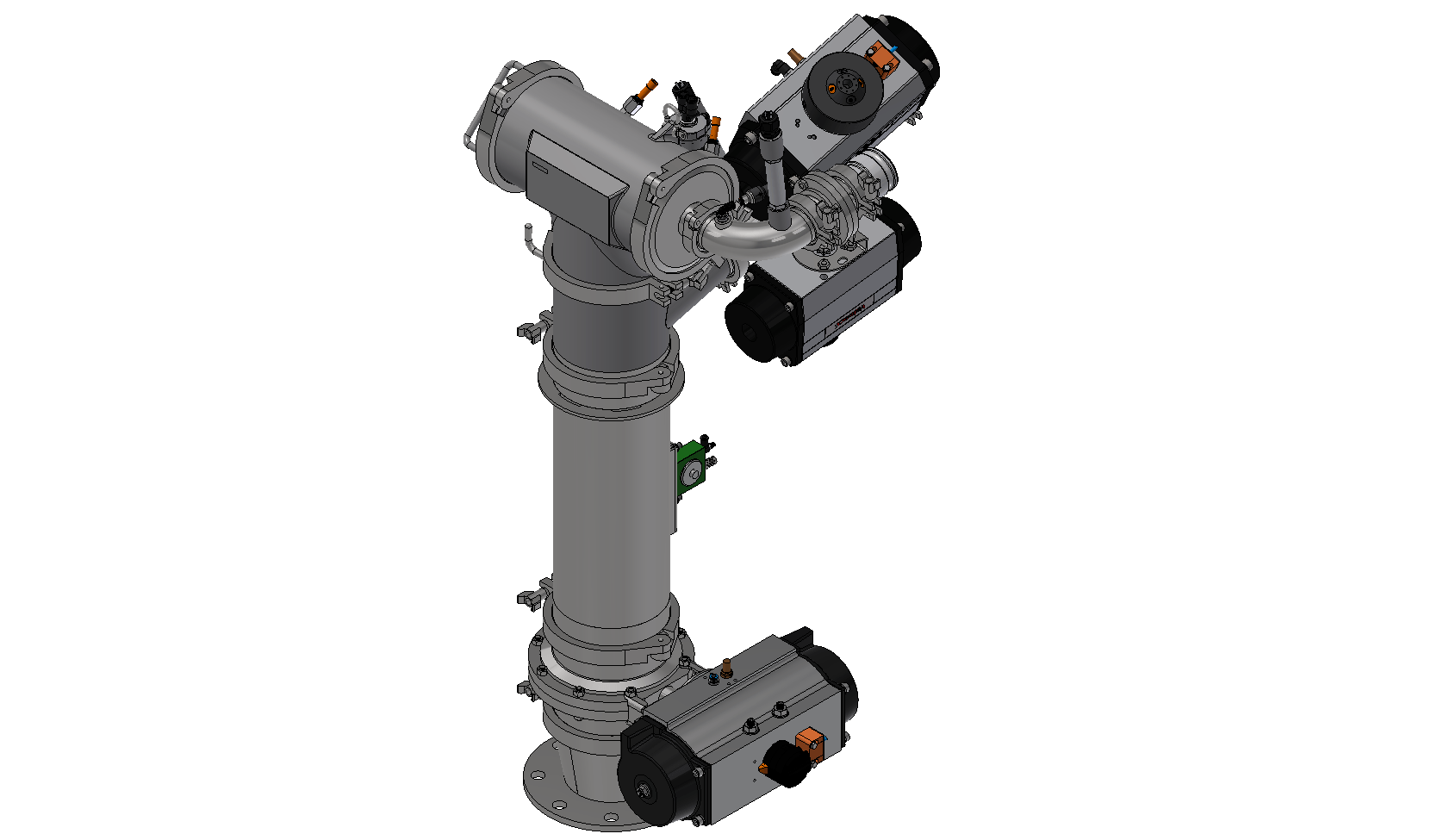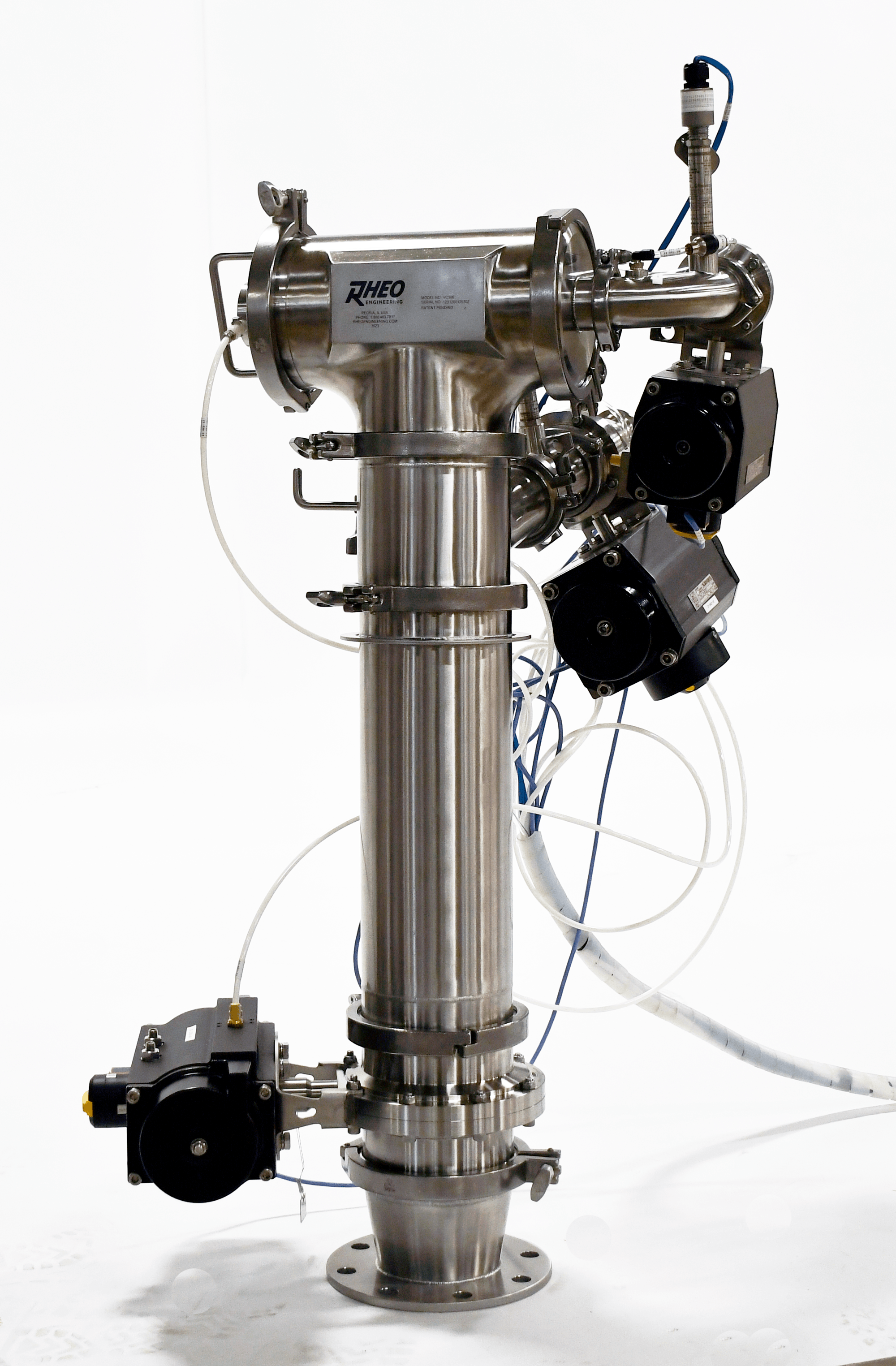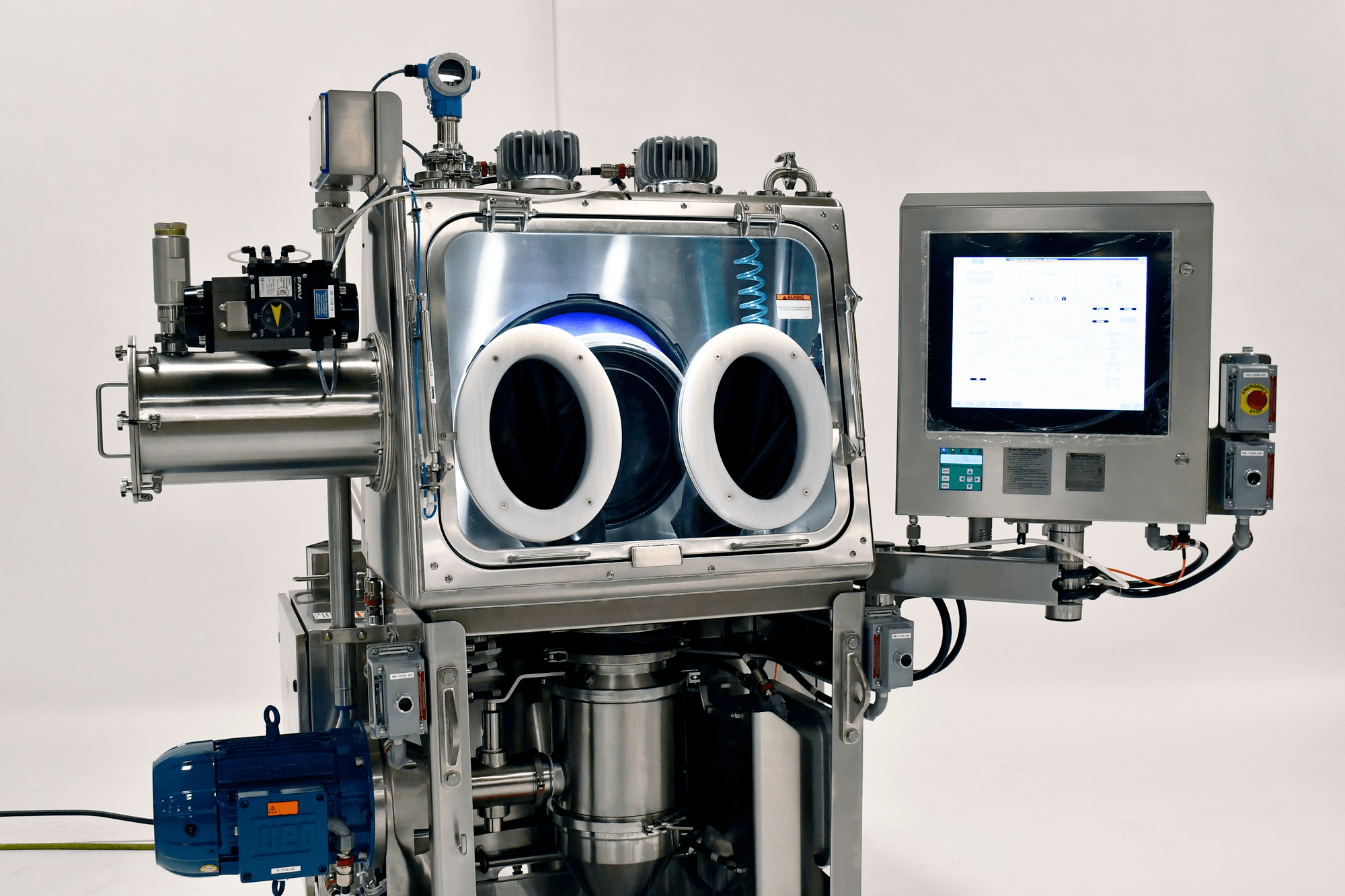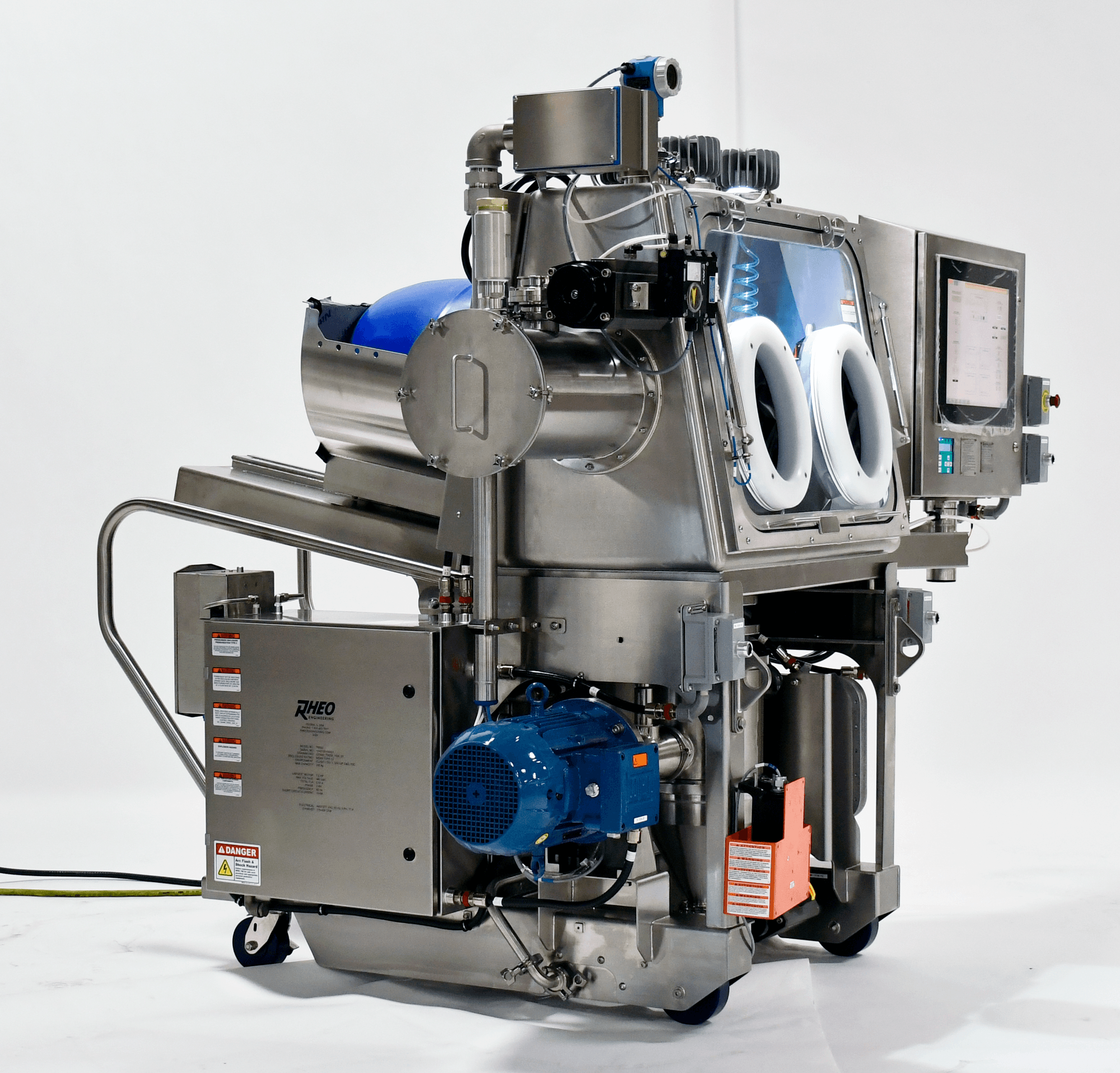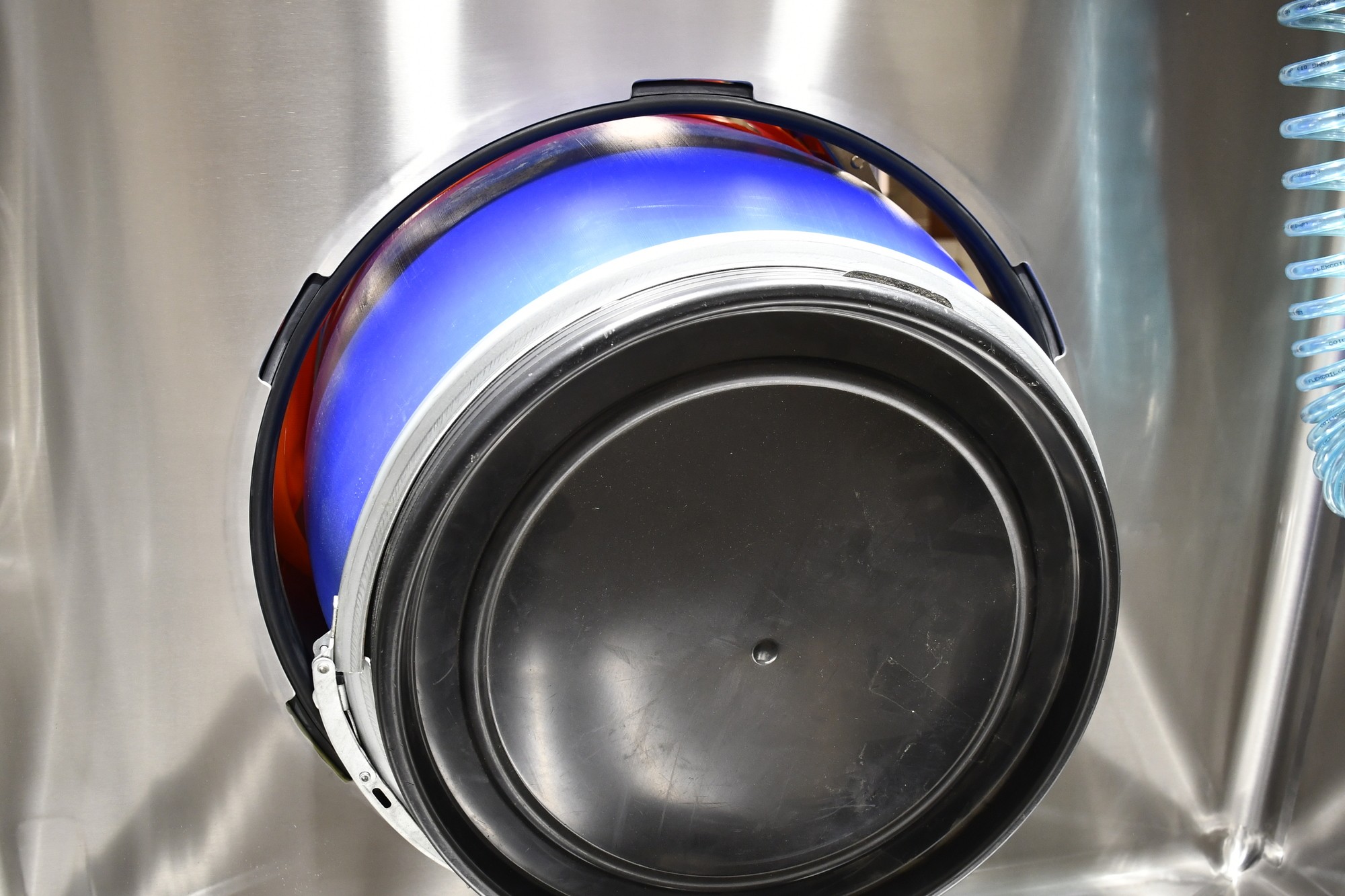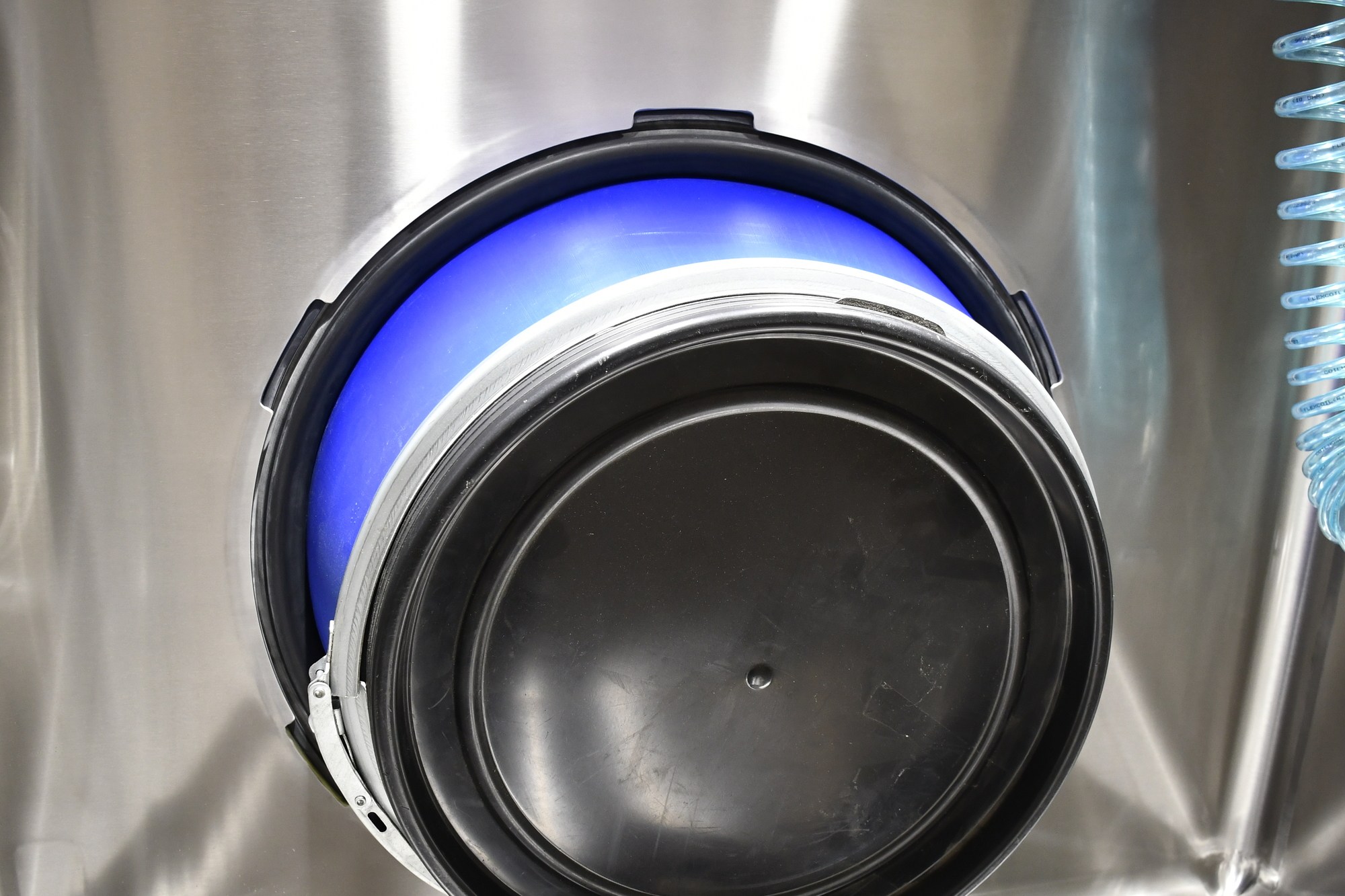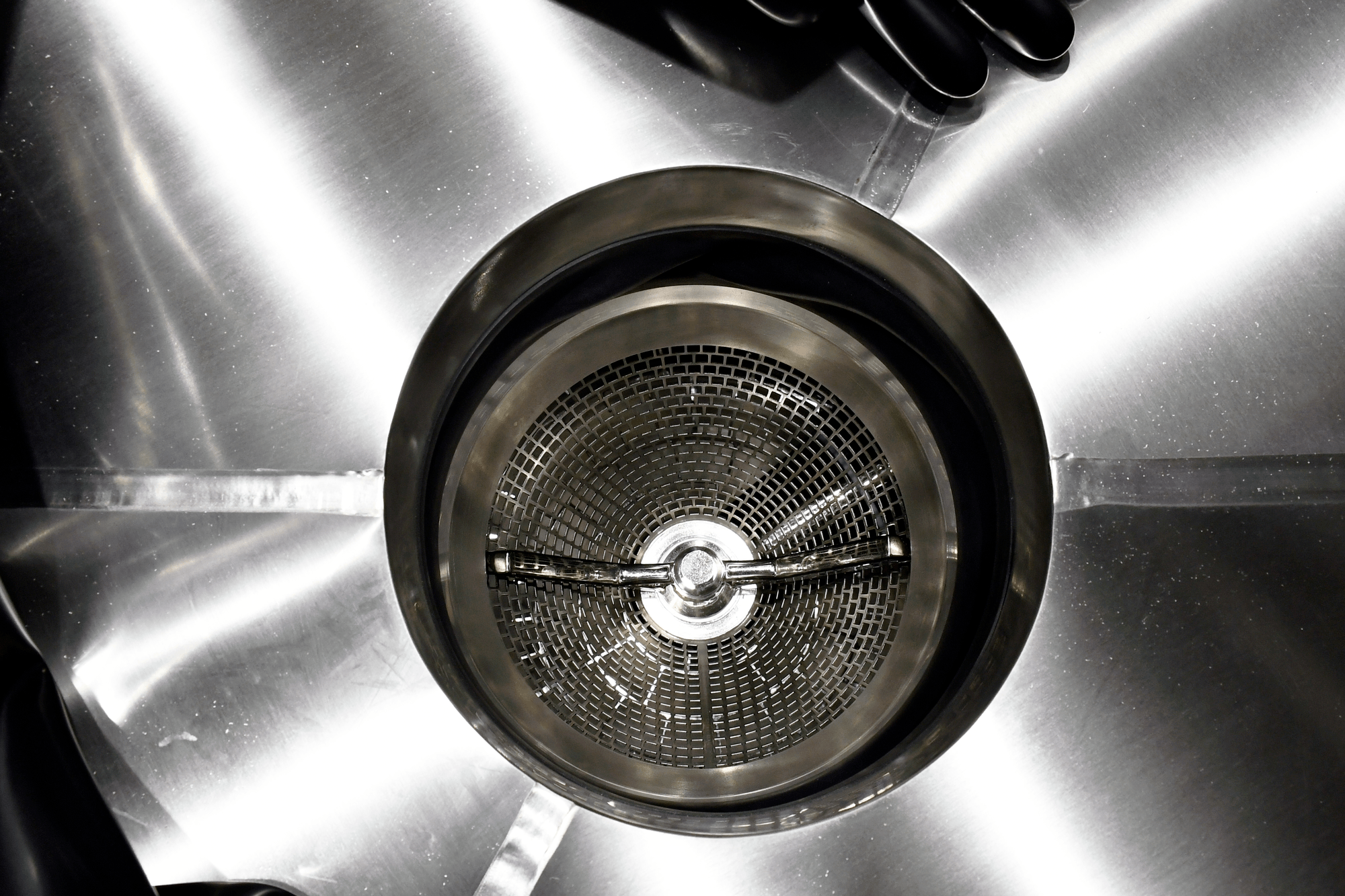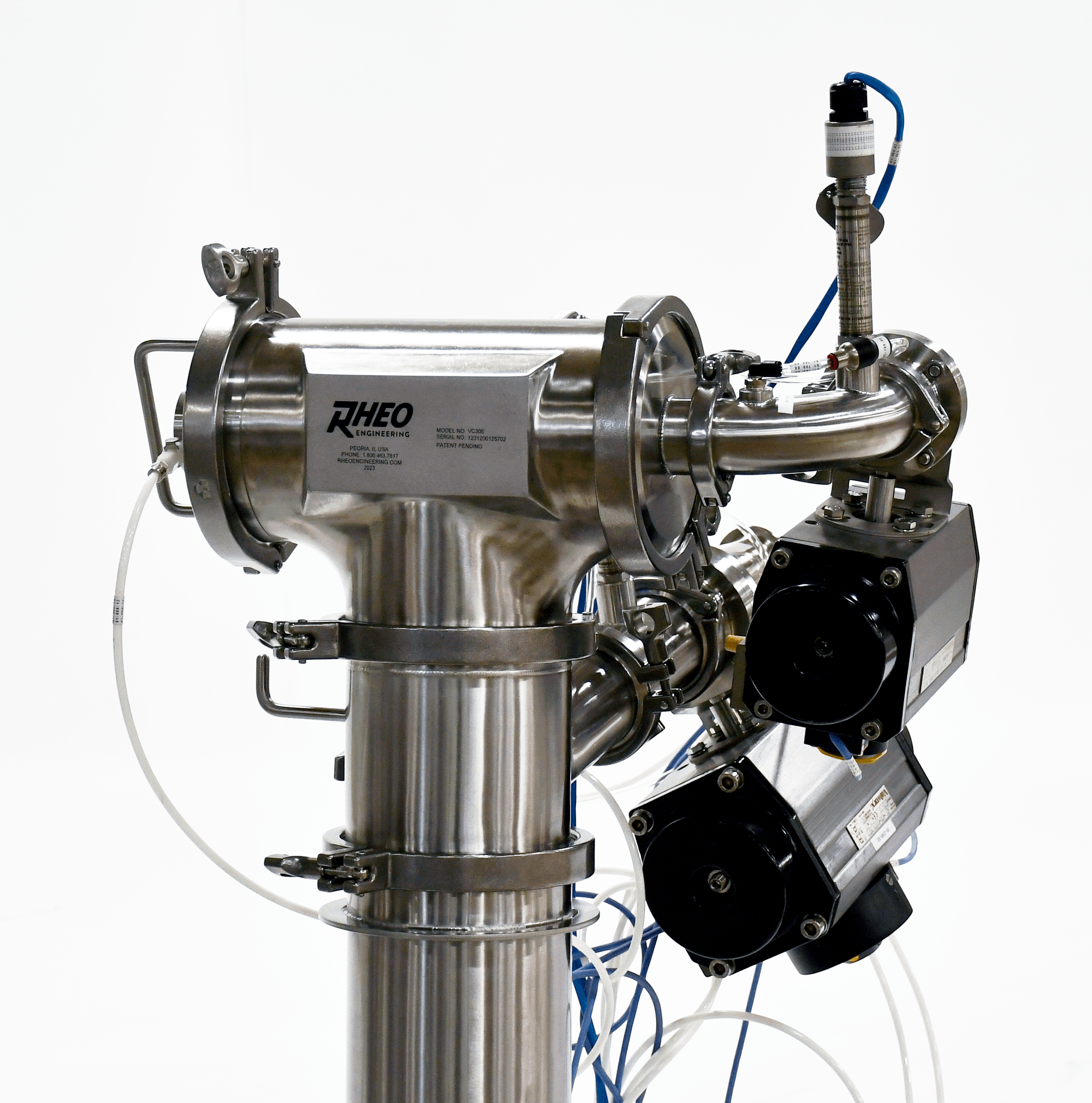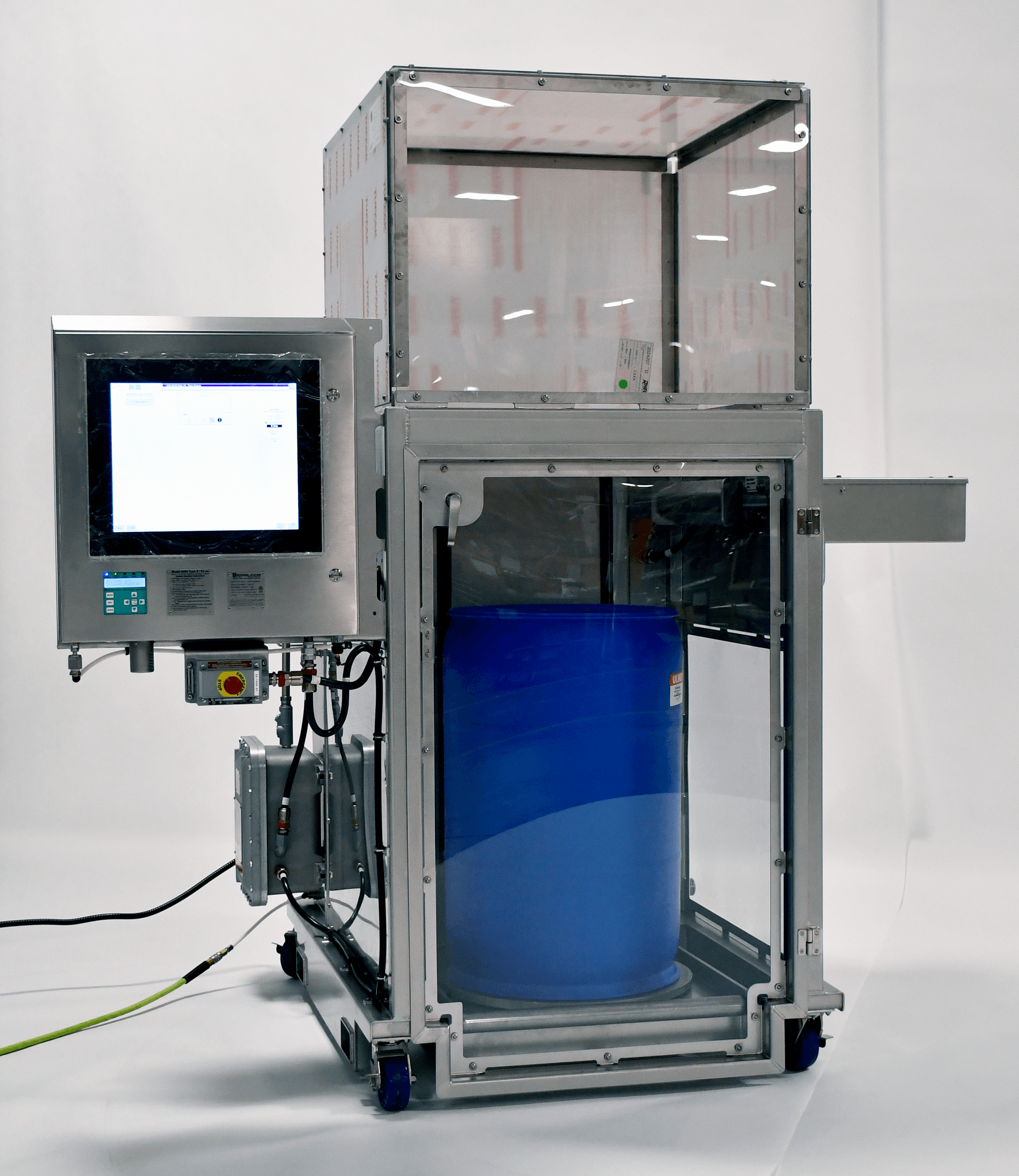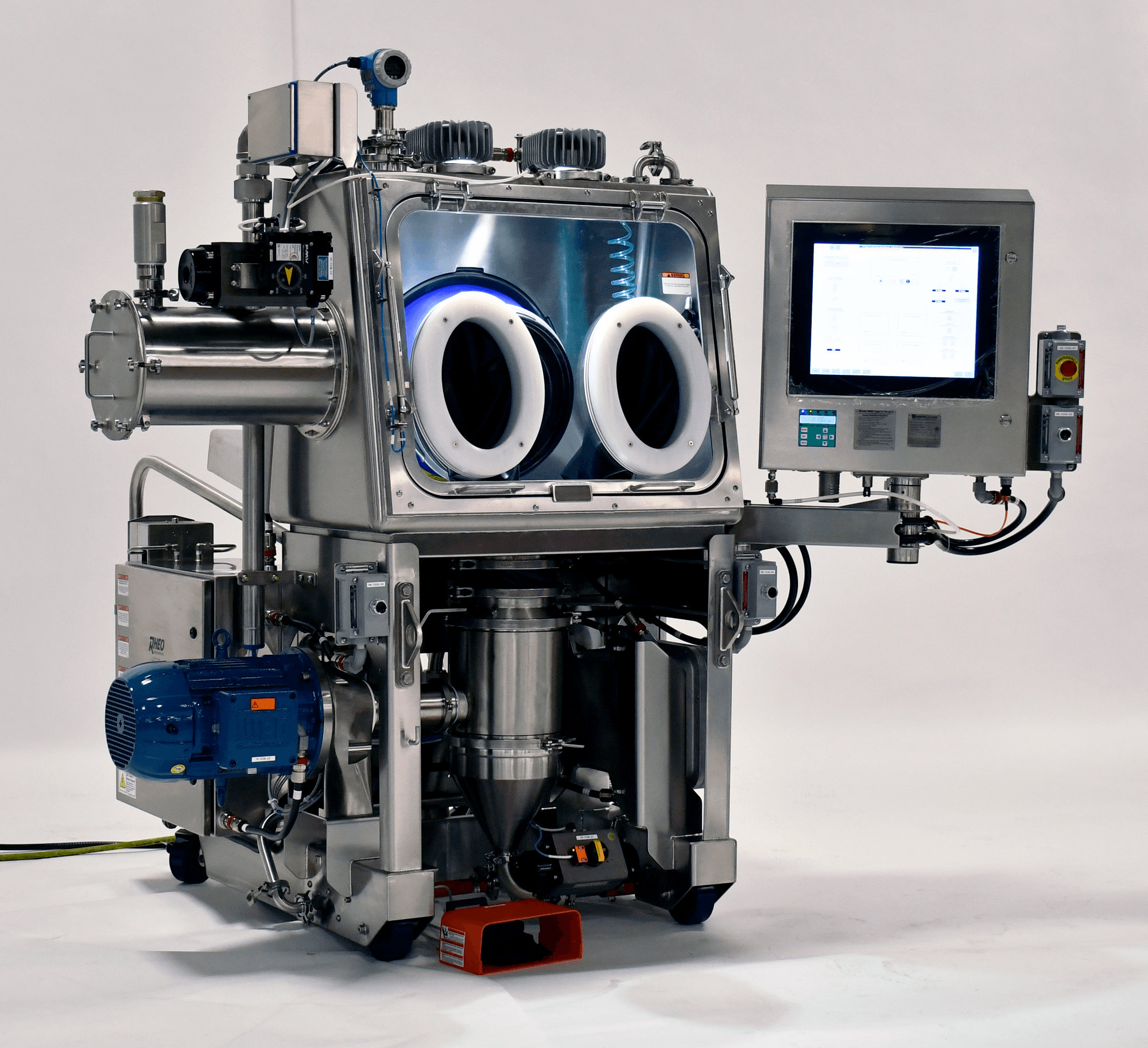
For this project, Rheo designed and built a hard-wall containment isolator for use during a vessel charging process. The client required the ability to transfer an agglomerated hazardous powder out of drums into vessel via an induction process. Rheo provided a Drum Conditioner upstream of the process that was used to break up the agglomerated material enough to flow out of the drums. Rheo also provided a Material Transfer Station [MTS] with rigid isolator and integrated Frewitt conical mill (CW-200), which reduced the agglomerations to an appropriate size for the Vacuum Conveyance System. The MTS’s integrated Drum Tipper and inflatable seal docking allowed for an efficient drum change-out process. Rheo provided four Vacuum Conveyance Receivers for charging into different client process vessels. The MTS allows operators to ergonomically unload and process drums into charge reactors. The MTS includes a pneumatic spray gun to allow operators to blow off any residual dust from drums an walls for cleaning.
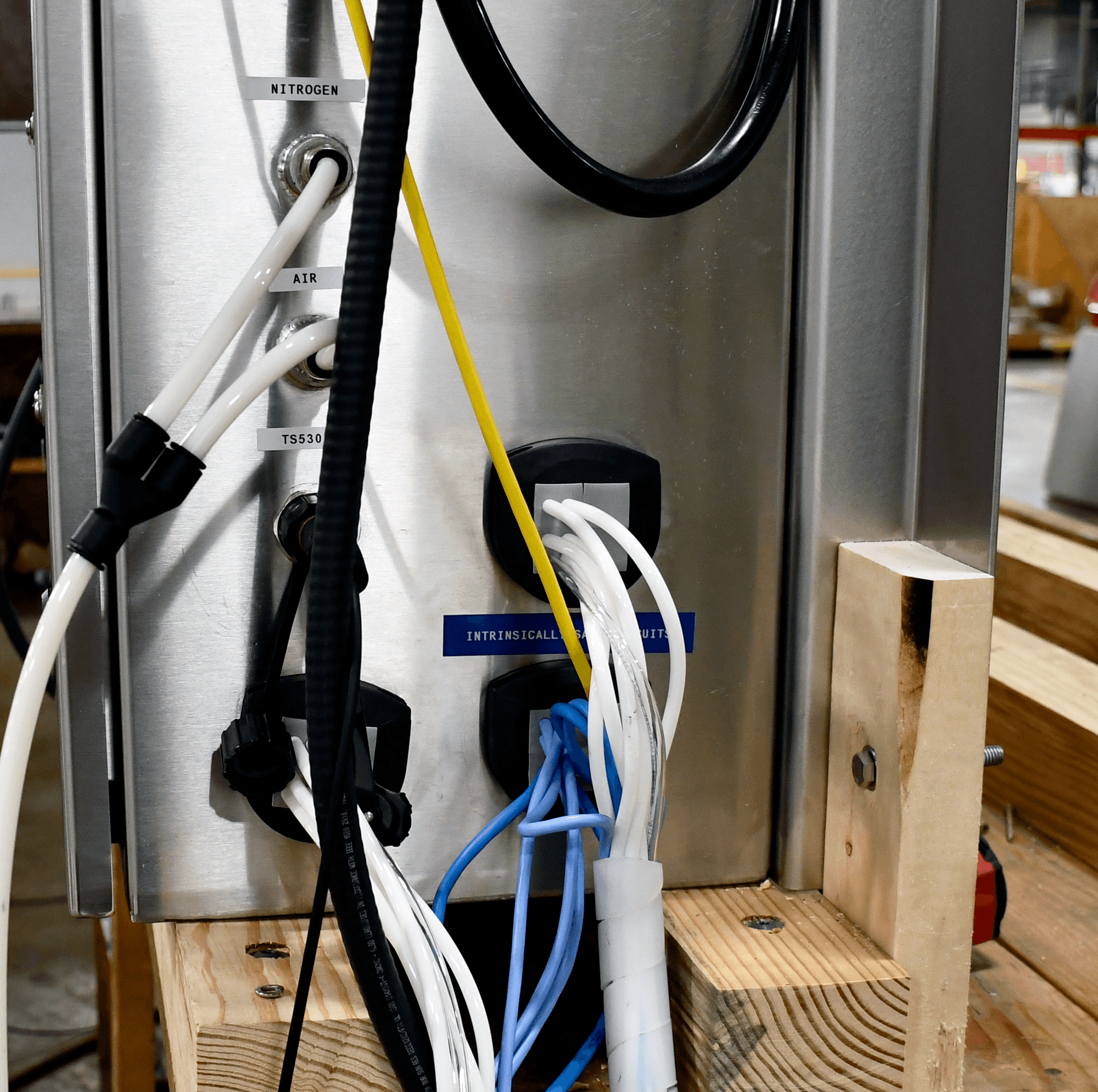
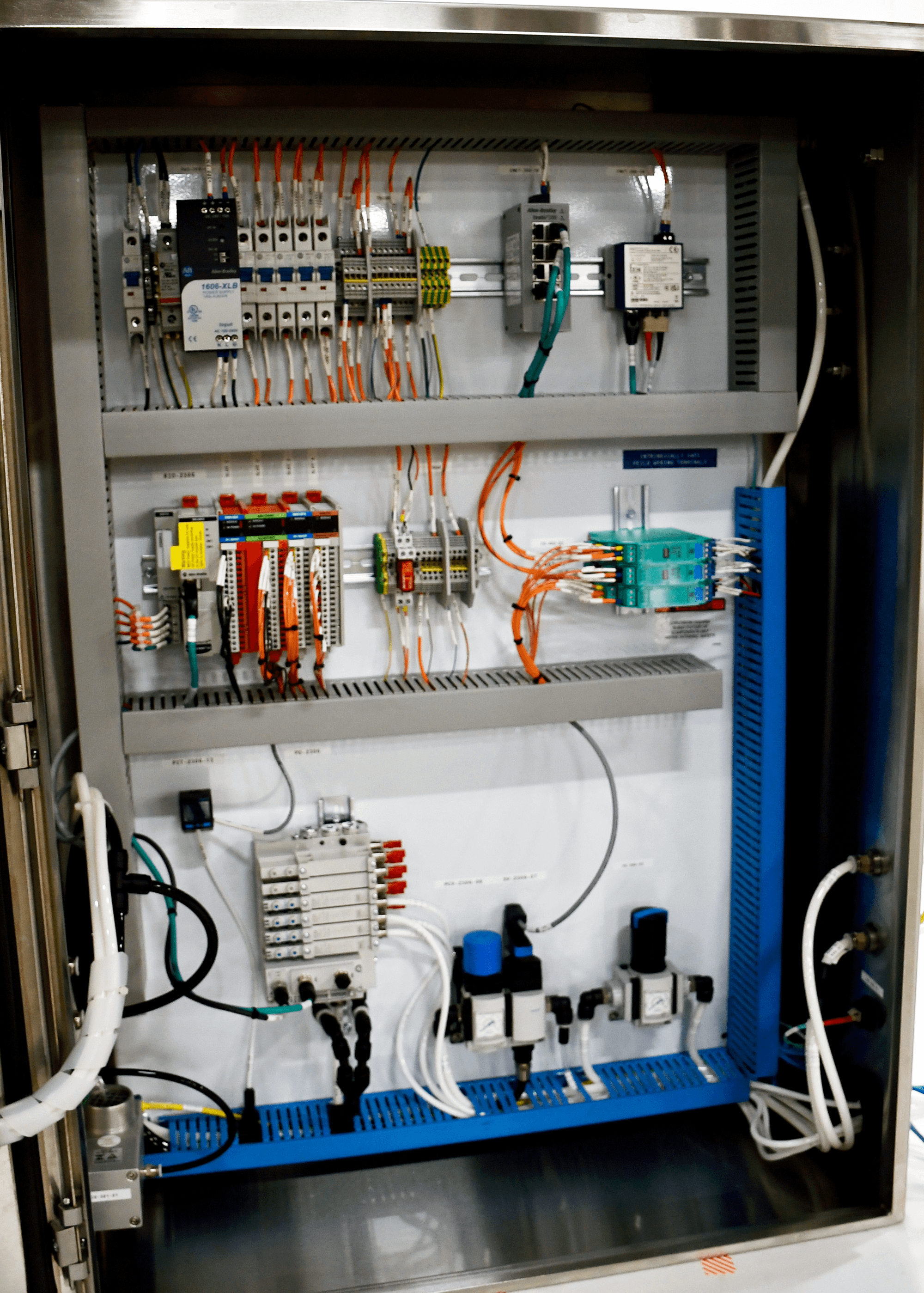
Rheo provided the controls for all the equipment, managed by the operator through a touch screen Pepperl & Fuchs HM. Atmosphere control (negative pressure and nitrogen blanketing) was managed in the isolator automatically via PID control loops. The integrated conical mill is only allowed to run when the control sequence is in the appropriate step and operators hands are outside of the glovebox holding down dual safety buttons. All equipment was designed for use in a Class I, Division 1 Group C&D area via a combination of intrinsically safe, purged and pressurized, and explosion proof components. The purging system was provided by Pepperl and Fuchs EPS 6000 Type X purging system. Fiber Optic communications allow the MTS to safely communicate between vacuum conveyance receiver control panels and mobile vacuum pump skid.
The Vacuum Conveyance process was fluidized with nitrogen at the MTS product inlet and for pre-filter blow-off to avoid introducing oxygen into the client’s reactor. The Vacuum Conveyance Receivers are connected to control panels, with each panel capable of controlling one or two receivers.